

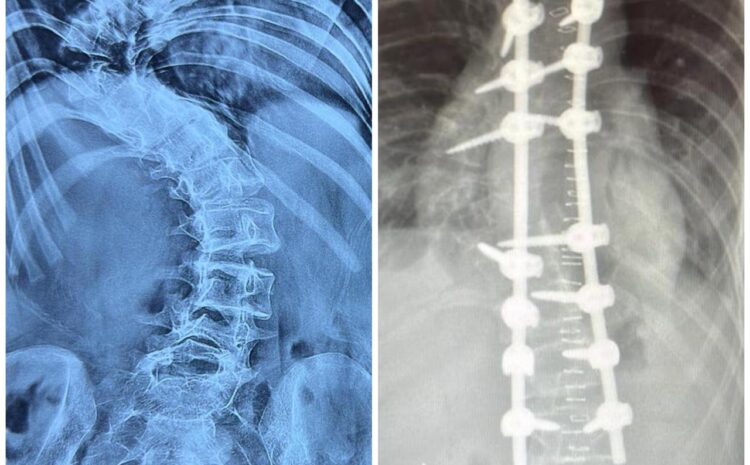
Acute Thoracic Curve Correction with Corpectomy and Laminectomy
Spinal deformities can vary in severity, but some cases present with extremely sharp and rigid curves that require advanced surgical intervention. An acute hairpin bend of the thoracic spine is one such complex condition. Due to the severe angulation of the spinal column, patients may experience significant postural imbalance, pain, reduced mobility, and potential neurological complications. Fortunately, modern spine surgery techniques can effectively correct these challenging deformities and restore spinal alignment.
Understanding Acute Thoracic Hairpin Curve Deformity
A hairpin curve refers to a severe and sharply angled spinal deformity that creates an abrupt bend within the thoracic spine. Unlike gradual spinal curves, this condition often results in a rigid deformity that cannot be corrected through conservative treatment alone.
Furthermore, the abnormal curvature may place excessive stress on the spinal cord and surrounding structures. As the deformity progresses, patients may develop difficulty maintaining posture, back pain, breathing limitations, and neurological symptoms.
Therefore, early evaluation by an experienced spine deformity specialist is essential for accurate diagnosis and treatment planning.
Case Overview
This case involved a patient with a severe acute hairpin bend at the thoracic curve. The deformity was highly rigid and significantly affected spinal alignment.
Comprehensive clinical examination and advanced imaging studies revealed the complexity of the curve and its impact on the surrounding spinal structures. Consequently, surgical correction was recommended to achieve spinal balance, decompress neural elements, and improve overall function.
Surgical Procedure Performed
To correct the deformity, a combination of advanced spinal reconstruction techniques was performed.
Corpectomy
Corpectomy involves the removal of a vertebral body that contributes to the deformity. This procedure creates space for correction and allows the surgeon to realign the spine more effectively.
Additionally, corpectomy helps reduce severe angulation while improving spinal balance.
Posterior Laminectomy
Posterior laminectomy was performed to decompress the spinal canal and relieve pressure on the spinal cord.
As a result, adequate space was created for neural structures, reducing the risk of neurological complications during and after correction.
Multilevel Facetectomy
Facetectomy at multiple spinal levels was carried out to release rigid spinal segments and increase flexibility.
Moreover, this technique enabled gradual and controlled correction of the severe thoracic deformity.
Spinal Realignment and Fixation
After achieving the desired correction, spinal instrumentation and fixation were used to stabilize the spine and maintain alignment during healing.
This step is critical for ensuring long-term correction and preventing recurrence of the deformity.
Benefits of Surgical Correction
Advanced spine reconstruction surgery offers several important benefits for patients with severe thoracic deformities.
Improved Spinal Alignment
Correction of the hairpin curve restores a more natural spinal posture and balance.
Enhanced Mobility
Patients often experience improved movement and greater functional ability following recovery.
Reduced Neurological Risk
Decompression of the spinal cord helps protect neurological function and reduces nerve-related symptoms.
Better Quality of Life
Many patients report improved confidence, comfort, and overall physical function after successful deformity correction.
Long-Term Stability
Modern fixation systems provide durable spinal support and help maintain correction over time.
Recovery and Rehabilitation
Recovery following complex spine surgery requires careful monitoring and a structured rehabilitation program.
Initially, patients are encouraged to begin supervised mobilization as recommended by their surgeon. Subsequently, follow-up evaluations and imaging studies help assess healing and spinal alignment.
In addition, physical therapy may be recommended to improve strength, flexibility, and overall function during recovery.
Why Timely Treatment Is Important
Severe thoracic deformities can worsen over time if left untreated. Consequently, progressive curvature may increase pain, affect lung function, and place additional stress on the spinal cord.
Therefore, timely surgical intervention can prevent further progression while improving spinal alignment and overall health outcomes.
Conclusion
An acute hairpin bend of the thoracic spine represents a highly complex spinal deformity that requires specialized surgical expertise. In this case, successful correction was achieved through corpectomy, posterior laminectomy, and multilevel facetectomy, followed by spinal stabilization and fixation.
As a result, the patient achieved improved spinal alignment, enhanced stability, and better functional outcomes. With advanced spine surgery techniques and comprehensive postoperative care, even severe thoracic deformities can be corrected successfully.