

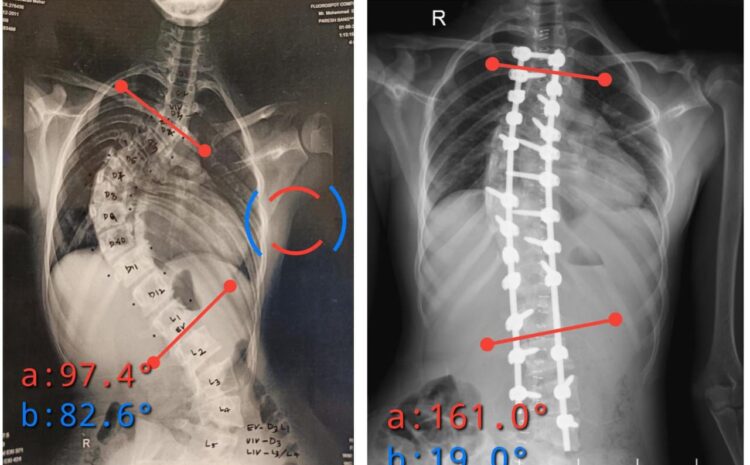
90° Spinal Curve Correction with Pedicle Subtraction Osteotomy
A severe spinal deformity can significantly affect posture, mobility, and quality of life. In advanced cases, the spinal curve may become rigid and continue to progress over time. This case highlights the successful correction of a long 90-degree spinal curve using advanced spinal reconstruction techniques, including Pedicle Subtraction Osteotomy (PSO), multilevel facetectomy, and long-segment fixation.
Understanding Severe Spinal Deformity
Spinal deformities such as scoliosis and kyphosis can gradually worsen if left untreated. As the curve increases, patients may experience:
- Chronic back pain
- Difficulty standing upright
- Imbalance while walking
- Reduced flexibility
- Fatigue during daily activities
- Cosmetic concerns due to abnormal posture
Furthermore, severe curves greater than 90 degrees can place excessive stress on the spine and surrounding structures. Therefore, early evaluation by a spine specialist is essential.
Patient Case Overview
The patient presented with a long and rigid 90-degree spinal curve that had progressed significantly over time. Due to the severity of the deformity, conservative treatment options were no longer effective.
After a detailed clinical examination and advanced imaging studies, a comprehensive surgical correction plan was developed to restore spinal alignment and improve overall function.
Surgical Procedure Performed
The patient underwent complex spinal deformity correction surgery involving multiple advanced techniques.
Pedicle Subtraction Osteotomy (PSO)
Pedicle Subtraction Osteotomy is a specialized spinal procedure used to correct severe and rigid deformities. During the surgery, a wedge-shaped portion of the vertebra is removed to allow controlled realignment of the spine.
As a result, significant correction of the spinal curvature can be achieved while restoring proper balance.
Multilevel Facetectomy
Facetectomy was performed at multiple spinal levels to release stiff segments of the spine. This step increased spinal flexibility and allowed for more effective correction of the deformity.
Additionally, facetectomy helped reduce tension across the spinal column during realignment.
Long-Segment Fixation
Following deformity correction, long-segment spinal fixation was performed using specialized implants and rods. This technique provides strong stabilization and helps maintain the corrected spinal alignment during healing.
Moreover, long-segment fixation reduces the risk of recurrence and promotes long-term spinal stability.
Benefits of Surgical Correction
Advanced spinal reconstruction procedures offer several important benefits, including:
- Significant correction of severe spinal deformity
- Improved posture and spinal alignment
- Enhanced balance and mobility
- Reduced pain and discomfort
- Better functional capacity
- Improved cosmetic appearance
- Increased quality of life
Consequently, many patients experience substantial improvements in both physical function and confidence after surgery.
Recovery and Rehabilitation
Recovery following complex spinal deformity surgery requires careful monitoring and rehabilitation. Initially, patients are encouraged to mobilize under medical supervision.
Physical therapy plays a vital role in restoring strength, flexibility, and endurance. In addition, regular follow-up appointments help ensure proper healing and maintenance of spinal alignment.
Most importantly, adherence to post-operative guidelines contributes significantly to successful long-term outcomes.
Why Advanced Spine Surgery Is Important
Severe spinal curves can continue to progress and lead to significant functional limitations if left untreated. Therefore, advanced procedures such as Pedicle Subtraction Osteotomy provide an effective solution for correcting rigid and complex deformities.
With modern surgical techniques, spine surgeons can achieve remarkable improvements in alignment, stability, and overall patient well-being.
Conclusion
This case demonstrates the successful correction of a long 90-degree spinal curve through Pedicle Subtraction Osteotomy, multilevel facetectomy, and long-segment fixation. Through meticulous surgical planning and advanced spinal reconstruction techniques, substantial deformity correction and spinal balance were achieved.
As a result, the patient benefited from improved posture, enhanced mobility, and a better quality of life. Early diagnosis and expert surgical management remain key factors in achieving successful outcomes for patients with severe spinal deformities.